
EK:210 Head Tracking Mouse Control Project

Collaborators: Sarah Hanifin, Kaushik (KJ) Jasti, Jeremy Sajda, Maysarah (Miso) Sukkar
This project aimed to create an accessible and intuitive solution for individuals with limited manual dexterity or those unable to use a traditional computer mouse. The result was a device that translates head movements into cursor movements on a computer, offering a hands-free alternative for interacting with digital interfaces.
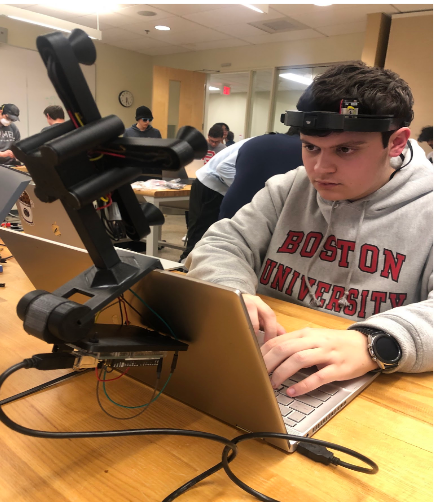
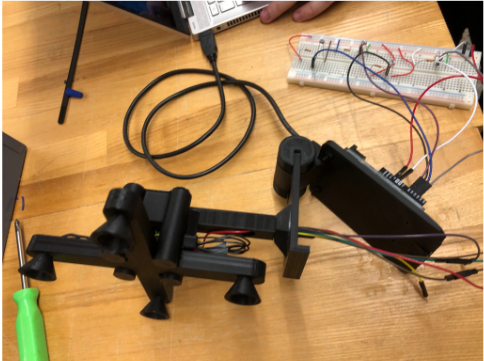
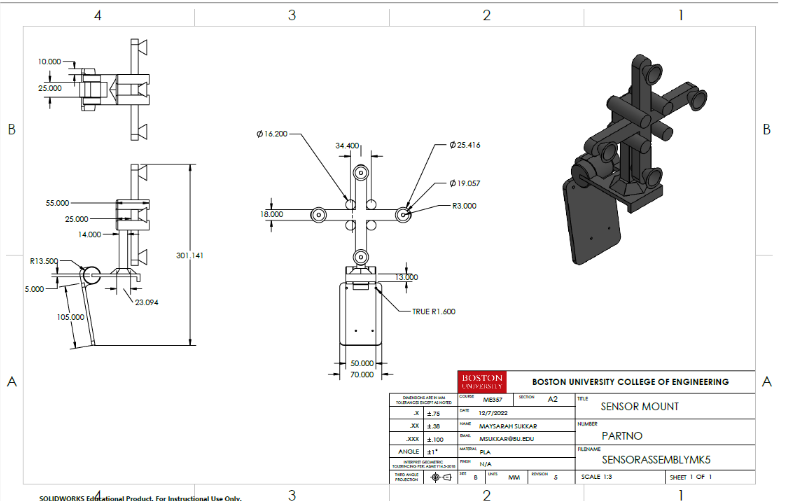
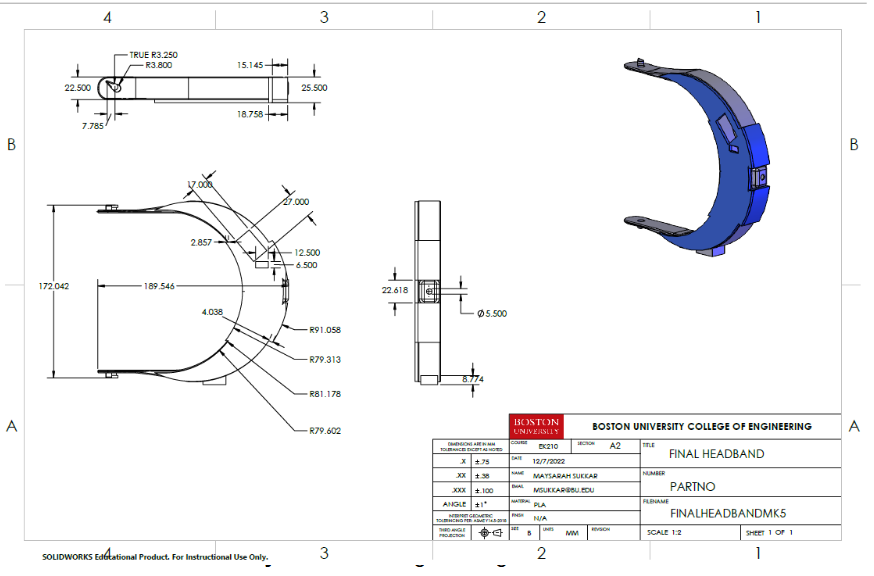
The system is composed of a wearable, adjustable headband equipped with an LED light and a computer-mounted sensor array. The headband emits light, which is detected by photoresistors in the sensor system. Using Arduino and MATLAB, the detected light intensity is processed and translated into cursor positional changes, effectively linking head movement to cursor control.
Technical Design and Features
Comfort and Usability: The headband is lightweight, adjustable, and battery-powered for user comfort and portability.
Sensor System: Photoresistors are connected to analog pins on an Arduino, which is linked to the user’s computer. MATLAB processes the positional data to control the cursor.
Durability and Reliability: While the product is not designed for harsh environments, it is robust enough to withstand drops from typical laptop heights (20–25 cm). The system operates reliably by using green light to avoid interference from ambient light sources.
Battery Life: The LED has a calculated operational time of approximately 39.47 hours, powered by a 750 mAh battery with a current draw of 0.019 A. Batteries are removable and easily replaceable for continuous usage.
Experimental Process and Results
The team conducted several tests to validate the functionality of the device:
Intensity vs. Distance: Tests demonstrated that light intensity readings decrease with increased distance, confirming the photoresistors' sensitivity and ability to detect directional light.
Spot Size Measurement: Using a ruler, the team measured the illuminated area at varying distances to understand the light distribution and optimize sensor placement.
Consistency and Repeatability: The device consistently detected which sensor was illuminated, ensuring reliable operation across repeated tests.
Final Design
The completed system includes a refined sensor mount and a comfortable, durable headband. This design balances usability and performance, making it accessible for users with physical disabilities.
This project demonstrates an innovative approach to assistive technology by leveraging simple, cost-effective components. It highlights how engineering solutions can address specific accessibility needs, fostering independence and inclusion for users with mobility challenges.


Comments